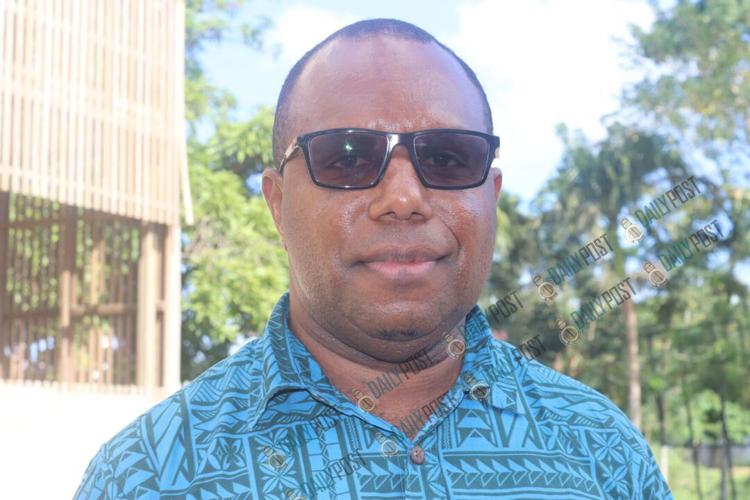
Member of Parliament (MP) for Tanna, Andrew Napuat, who is also the First Deputy Speaker of Parliament, is the first MP to submit a report in April, detailing the program activities and spending of the VT1 million allocated for Referendum awareness and advocacy in his constituency.
Napuat visited his constituency, specifically the Naka Area, to explain the referendum and the proposed changes. He informed the people that if they felt he was not in a position to conduct the awareness himself, he would appoint a team to carry out the task on his behalf, which he did.
On Tanna, there are seven language boundaries, seven MPs, and seven area councils.
MP Napuat focused on the Naka area. He appointed a team, provided funding, and provided all required awareness materials.
The team conducted the awareness campaign across all areas. Napuat believed this approach allowed people the freedom to express themselves and make their own decisions. He chose not to be present during the awareness activities to avoid influencing their decisions.
He advised his team to record the number of females and males that were present, capture pictures, and record their decisions or feedback.
The Tanna MP also highlighted a unique thing about the Tanna MPs is that they do not cross the floor.
He noted that the people of Tanna are tired of the instability and have made their decision to vote ‘yes’ in the upcoming referendum.
But, when the arguments on the other side of the proposed changes reach the people, they now have to decide whether to vote ‘yes’ or ‘no.’
There are five tribe councils within the Naka area council. The team visited nine communities and conducted the awareness there. They also made use of days when the women do market.
On Chiefs Day, a day that unites the communities, Napuat sponsored transportation to bring people together and facilitated awareness activities. He also used the chiefs’ network to disseminate information.
Napuat told the people that whether they voted yes or no, they would see the results of their decisions and face the consequences accordingly.
After the first extraordinary session earlier this year, the government, led by the Minister of Internal Affairs, decided to support Members of Parliament (MPs) in providing awareness on the referendum, proposed changes, and related laws in their respective constituencies.
MP Napuat clarified that MPs were chosen for this task because they have firsthand knowledge of parliamentary actions, including experiences with MPs switching allegiance or crossing the floor.
Despite some public concerns that MPs should not be involved due to their role in political instabilities, the government believed that MPs could use their political networks to effectively communicate the reasons behind the referendum and the events leading up to it.
MP Napuat mentioned his active involvement in government formations and negotiations, particularly highlighting his role as a representative for the Graon mo Jastis Pati (GJP) during such processes, including negotiations for establishing new governments and portfolio allocations.
Napuat also acknowledged the efforts of the Movement Red members, who collected signatures nationwide and abroad, marching to the Parliament House to present their petition.
He said at that time when the Movement Red members marched to the Parliament, he was requested to represent the Office of the Speaker as the Speaker had another commitment to attend to. He received the petition from the Movement Red members and passed it on to the Prime Minister, who was also present.
As he represented the Parliament, Napuat explained that the legislative requests outlined in the petition would need to be presented by the executive to the Council of Ministers. The Office of the Attorney General would then draft the necessary amendments, which would then be presented before Parliament.
Napuat recalled addressing the citizens who marched to the parliament, mentioning that most complaints on social media about MPs crossing the floor. He questioned whether MPs were crossing the floor of their own will, or if they were being pressured by their supporters to do so.
He said he believes the supporters or citizens also pressure their MPs to move or cross the floor, which contributes to political instability.
source:Vanuatu daily post
 Andrew Solomon Napuat
Leave a comment